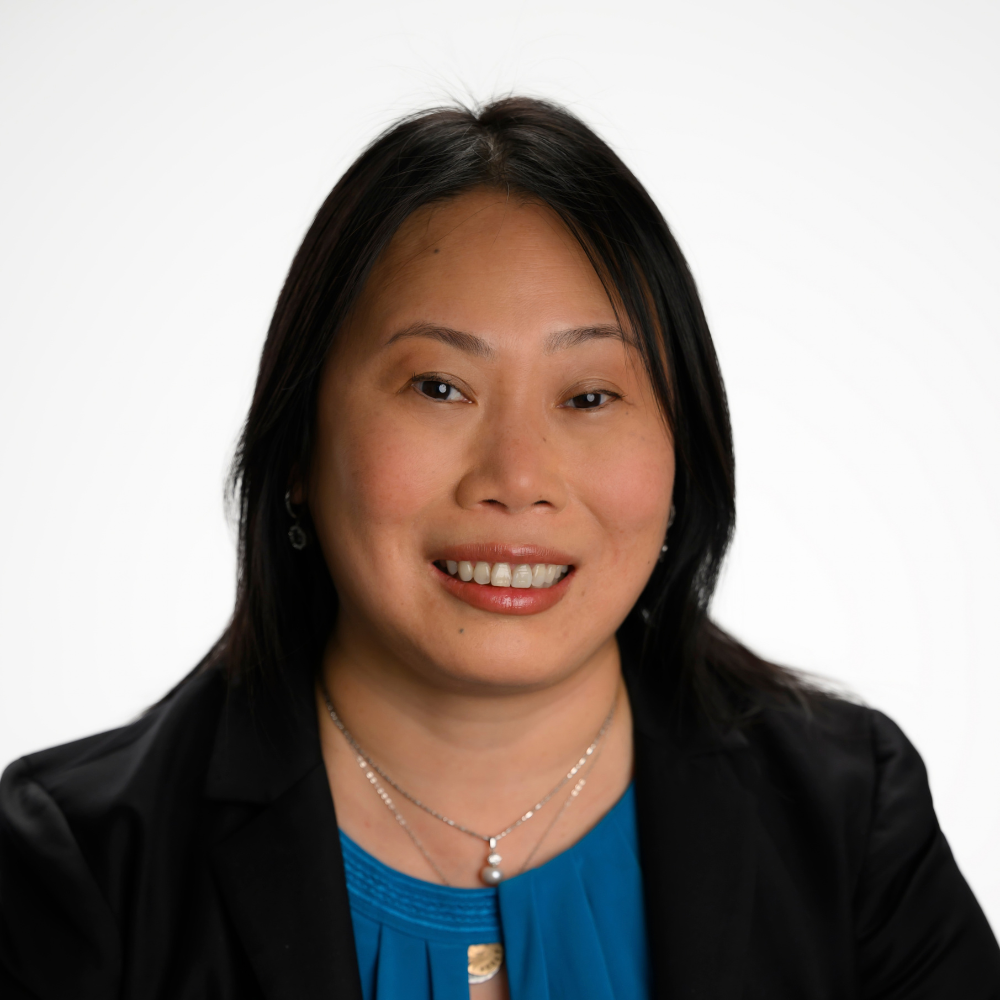
The Till & McCulloch Award recognizes the most impactful peer-reviewed article of the year by a stem cell or regenerative medicine researcher working in Canada. Dr. Stephanie Xie from the Princess Margaret Cancer Centre, University Health Network received the 2026 award for her Nature publication, “Human haematopoietic stem cells remember inflammatory stress.”
In this Q&A with SCN, Dr. Xie shares highlights from her award-winning research, reflects on her career path and advice, and offers perspective on where the field of regenerative medicine is heading.
1. First off, congratulations on receiving the 2026 Till & McCulloch Award! Can you walk us through the highlights of your Nature publication and share what impact you hope this work will have on future research in the field?
I was driven by a simple question: why do some people stay healthy as they age while others become more vulnerable to disease? Scientists have known for decades that chronic, low-level inflammation increases with age, a phenomenon known as “inflammaging.” What wasn’t clear was whether our blood stem cellscould actually remember past inflammatory experiences. To answer this question, my team and I developed specialized models to study human blood stem cells and discovered that some stem cells retain a long-lasting molecular “memory” of previous inflammatory exposures, even after the inflammation itself has resolved. We identified a previously unrecognized population of stem cells, which we called inflammatory memory hematopoietic stem cells (HSC-iM). We then found evidence of these cells in real-world settings. They accumulate with age, are more common in people recovering from severe infections, and are strongly associated with clonal hematopoiesis, an age-related condition that increases the risk of leukemia, cardiovascular disease, and other health problems. Importantly, these stem cells pass their inflammatory memory on to the immune cells they produce, providing a potential link between a person’s lifetime inflammatory experiences and their future health. I hope this work changes how we think about aging. Our findings suggest that blood stem cells carry a record of life’s inflammatory experiences, providing a potential biological link between past exposures and future health. Ultimately, this could open new opportunities to predict disease risk, improve stem cell therapies, and help more people age well.
2. Tell us a bit about how your career began and evolved. What drew you to study biology, and what inspired you to pursue a path in stem cell research, ultimately running your own lab?
I knew I wanted to be a scientist from a young age. As the child of immigrants, I was fortunate to benefit from outstanding public education and teachers who nurtured my curiosity and opened doors to research opportunities. My fascination with biology began in elementary school, where a science teacher filled the classroom with animals and sparked my interest in how living systems work. Later, at Hunter College High School, I discovered studio art and inspiring teachers encouraged my interest in biology further. They helped connect me with summer research opportunities at the City College of New York where I learned that benchwork was every bit as creative as art. I quickly became hooked on the excitement of discovery and the chance to uncover something no one had known before. I have devoted my career to understanding hematopoietic stem cells and how they can go “bad” and cause disease. I am fascinated by their remarkable ability to self-renew and adapt, and I love tackling the challenge of understanding how they function. What continues to inspire me is the opportunity to connect fundamental biological discovery with meaningful clinical impact.
3. Looking back, what was the most pivotal experience or relationship that shaped your journey to become a leading stem cell researcher?
The most pivotal influence on my career has been my long-time mentor, Dr. John Dick. He encouraged me to think boldly and tackle the toughest questions in stem cell biology. One of John’s greatest strengths is his ability to tailor his mentorship to each trainee. He gave me extraordinary freedom to develop my own scientific identity so I could follow the data, take risks, and grow as a scientist. Over the years, our relationship has evolved from mentor and trainee to colleagues. John played an instrumental role in helping me establish my own laboratory, which today is just seven floors away from his. His support and friendship have shaped not only the scientist I am now, but also the kind of mentor I aspire to be for the next generation of scientists.
4. For graduate students and early-career researchers who want to be in your shoes one day, what advice would you share? Which skills, experiences, or mindsets do you think are most crucial for success in this field?
My advice is to find your passion and be bold. My husband gave me a necklace that carries the motto I live by: “qui audet adipiscitur” Latin for “who dares, wins.” Work on problems that genuinely excite you. Passion for the question is what sustains you through the inevitable setbacks and makes the discoveries all the more rewarding. Read the literature deeply and question the interpretations. Find the gaps. Don’t be afraid to tackle difficult questions. The most important discoveries often come from pursuing questions that others think are already answered. Resilience is essential, because science rarely follows a straight path. Seek out great mentors and collaborators. Bold science requires teamwork.
5. You completed your formal education in the United States, before arriving in Canada as a postdoc in 2011. What were your first impressions of Toronto and Canada – both in general and specifically as a destination for life sciences research? How has Toronto been a supportive environment for you to do world-class research?
When I arrived in Toronto as a postdoctoral fellow in 2011, it immediately felt familiar. I was struck by how welcoming Toronto is. I grew up as a city kid in New York, living next to Yankee Stadium, and today I live within sight of the CN Tower and Rogers Centre. Toronto is an amazing melting pot of many peoples from around the world. That diversity is one of the city’s greatest strengths, and it extends to its scientific community. Toronto has been an extraordinary place to build a career in stem cell research. At UHN and Princess Margaret Cancer Centre and the greater Toronto scientific community, there is a deep commitment to translational science and a shared belief that discoveries in the laboratory should ultimately benefit patients. The close integration of discovery scientists with clinicians creates a uniquely collaborative environment where ambitious ideas can move quickly from basic discovery toward clinical impact. I feel incredibly fortunate to call Toronto home.
6. On a more personal note, what do you enjoy doing when you’re not working on your research? (Rituals, family time, creative passions, etc.)
Outside the lab, I love to cook. I was raised in a family and culture where food is one of the purest expressions of love, and cooking for my family remains one of my greatest pleasures. My two teenagers are enthusiastic beneficiaries of that tradition and further enjoy being much taller than their mother. I also love plants, particularly when it comes to orchids. I take great pride in coaxing orchids to rebloom. My husband, who is an Associate Dean at the University of Waterloo, has been commuting from Toronto for the past 15 years. He is a bike enthusiast and takes his folding bike on the train to Kitchener/Waterloo. I never learned how to ride a bike or drive. He got the family a custom triple tandem Dutch bicycle. We were even featured in the Toronto Star. We have spent countless hours cycling around Toronto through the years. Today, as we navigate some of the busiest periods of our respective academic lives, we remain intentional about making time for one another. We recently have taken to going to the gym together. Thanks to his encouragement, I have developed a newfound appreciation for functional strength training and have free weights in my office. I continue to love art and am grateful my job allows me the opportunity to see masterpieces all around the world.
7. Stem Cell Network is celebrating its 25th anniversary this year, so we want to ask: When you picture regenerative medicine in 25 years’ time, what do you hope that looks like in practical terms for patients with cancer and other aging-associated diseases?
Twenty-five years from now, I hope regenerative medicine will allow us to move beyond treating disease and toward preventing it. For patients with cancer and age-related diseases, that means identifying harmful changes in stem cells long before symptoms appear and intervening early to preserve health. I believe we will be able to intercept inflammation and harness the regenerative potential of stem cells to help people age well.