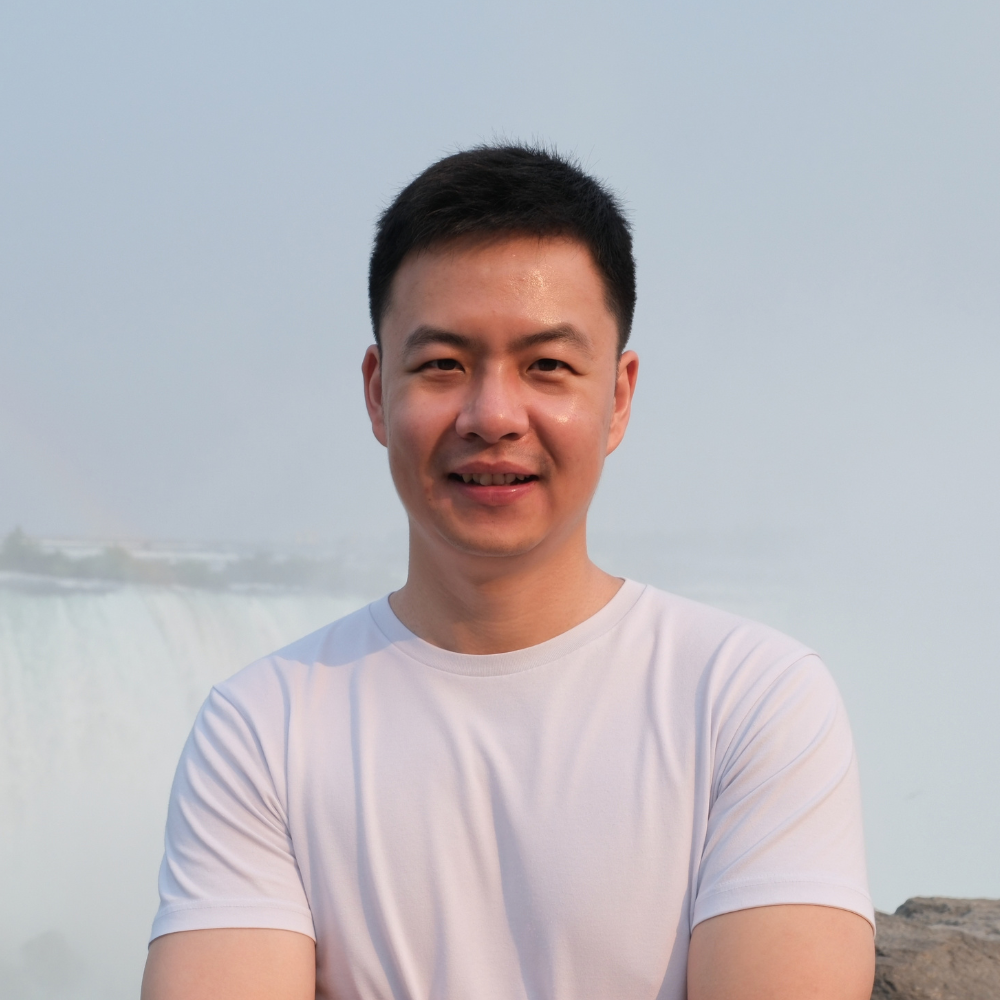
The Drew Lyall Award of Excellence recognizes the highest-ranked abstract in the Till & McCulloch Meetings abstract competition. Dr. Songtao Dong from the University of Toronto received the 2026 award as lead author of “Systemic muscle-targeted lipid nanoparticles edit muscle stem cells and improve cardiac and diaphragm pathology in Duchenne muscular dystrophy.”
In this Q&A with SCN, Dr. Dong shares highlights from his research, reflects on his career path and advice, and offers perspective on where the field of regenerative medicine is heading.
1. Congratulations on receiving the 2026 Drew Lyall Award of Excellence! Your research has applications in genome editing, RNA editing, cancer immunotherapy, and the treatment of genetic diseases. What excites you most about the problem you’re solving right now?
Developing more effective targeted LNP delivery systems for nucleic acid medicines, such as mRNA, circular RNA, tRNA, and DNA, is what excites me most. Whenever I see a strong reporter signal in the target organ after using an LNP I designed, I almost forget all the challenges and failed experiments that came before it. That moment is always very exciting and makes all the effort feel worthwhile.
2. Regenerative medicine is a highly interdisciplinary, rapidly moving field, and your work exemplifies that – bridging pharmaceutics, biomaterials, genome editing, and immunology. How do you manage to keep up and collaborate effectively?
I try to keep up by reading new papers across these different fields. I’ve set up several AI agents to summarize new publications for me every day, so I can quickly pick out the studies that interest me most and read them more carefully. I also really enjoy talking with people from different backgrounds. In our lab, we have people working in chemistry, pharmaceutics, computational science, molecular biology, and other areas, and talking with them often helps me understand the experimental details behind a paper that I might otherwise miss.
3. Who is your biggest role model or scientific inspiration, and why?
My mentor, Bowen Li, is my biggest role model. He is probably one of the hardest-working people in our lab, and he has built an environment where we have the resources and freedom to explore ambitious ideas. What I’ve learned most from him is scientific judgment: how to recognize a promising research direction, how to evaluate the potential of a project, and how to make a study more impactful. That has benefited me a lot and helped me understand what kind of PI I would like to become in the future.
4. You mentor graduate and undergraduate trainees. What are some common tips or guidance you find yourself giving to them, having recently been in their shoes?
One thing I always tell students is to read more papers, especially strong papers in their field. Learning a specific experimental technique, like running PCR, setting up a chemical reaction, or doing an intramuscular injection in mice, usually becomes easier with practice. The harder part is developing what I call “scientific taste”: knowing what makes a study important, what the fundamental questions in your field are, and how you might answer them. I think reading good papers and asking why the authors chose a particular question or approach is one of the best ways to develop that.
5. In what ways have you engaged with the Stem Cell Network, and what value have you gained from being part of the Network?
Our lab has received research funding from the Stem Cell Network, and we really appreciate that support. Being involved with the Network has also given me opportunities to connect with the broader regenerative medicine community and share our research. Participating in TMM and receiving the Drew Lyall Award of Excellence this year have made that experience especially meaningful to me.
6. Outside the lab, what helps you recharge? Is there a particular TV show, book, game, hobby, or something else you’re enjoying at the moment?
Two things: spending my weekends with my wife and going to the gym almost every weekday morning.
7. Stem Cell Network is celebrating its 25th anniversary this year, so we want to ask: What do you think will be the defining breakthrough in regenerative medicine within the next 25 years?
I hope that within the next 25 years, we will be able to safely and precisely correct disease-causing genes in virtually any type of stem cell directly in vivo. To me, that would be a truly transformative breakthrough for regenerative medicine and the treatment of genetic diseases.