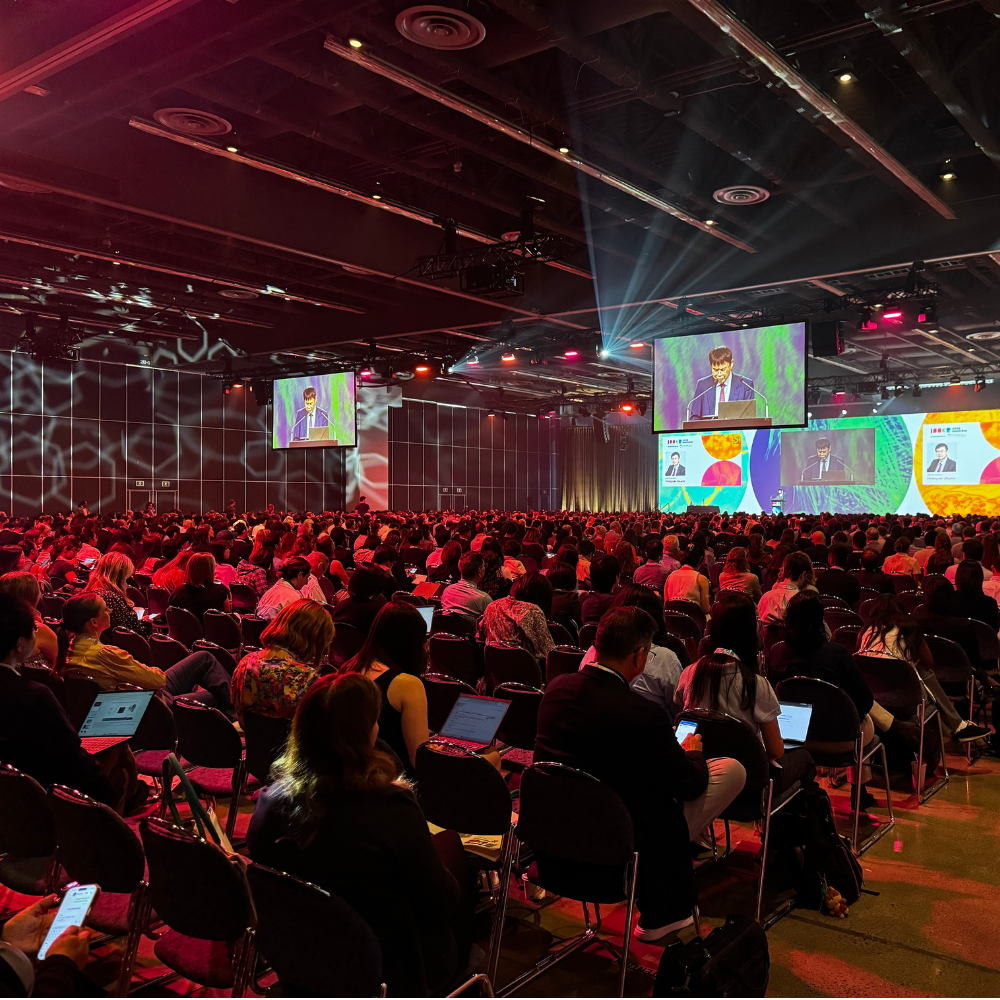
Twenty years ago, at the International Society for Stem Cell Research (ISSCR) 2006 meeting in Toronto, Dr. Shinya Yamanaka presented his field-altering work on induced pluripotent stem cells1 (iPSCs) for the first time. It is poetic that 20 years later, Dr. Yamanaka kicked off ISSCR 2026, again on Canadian soil in Montréal.
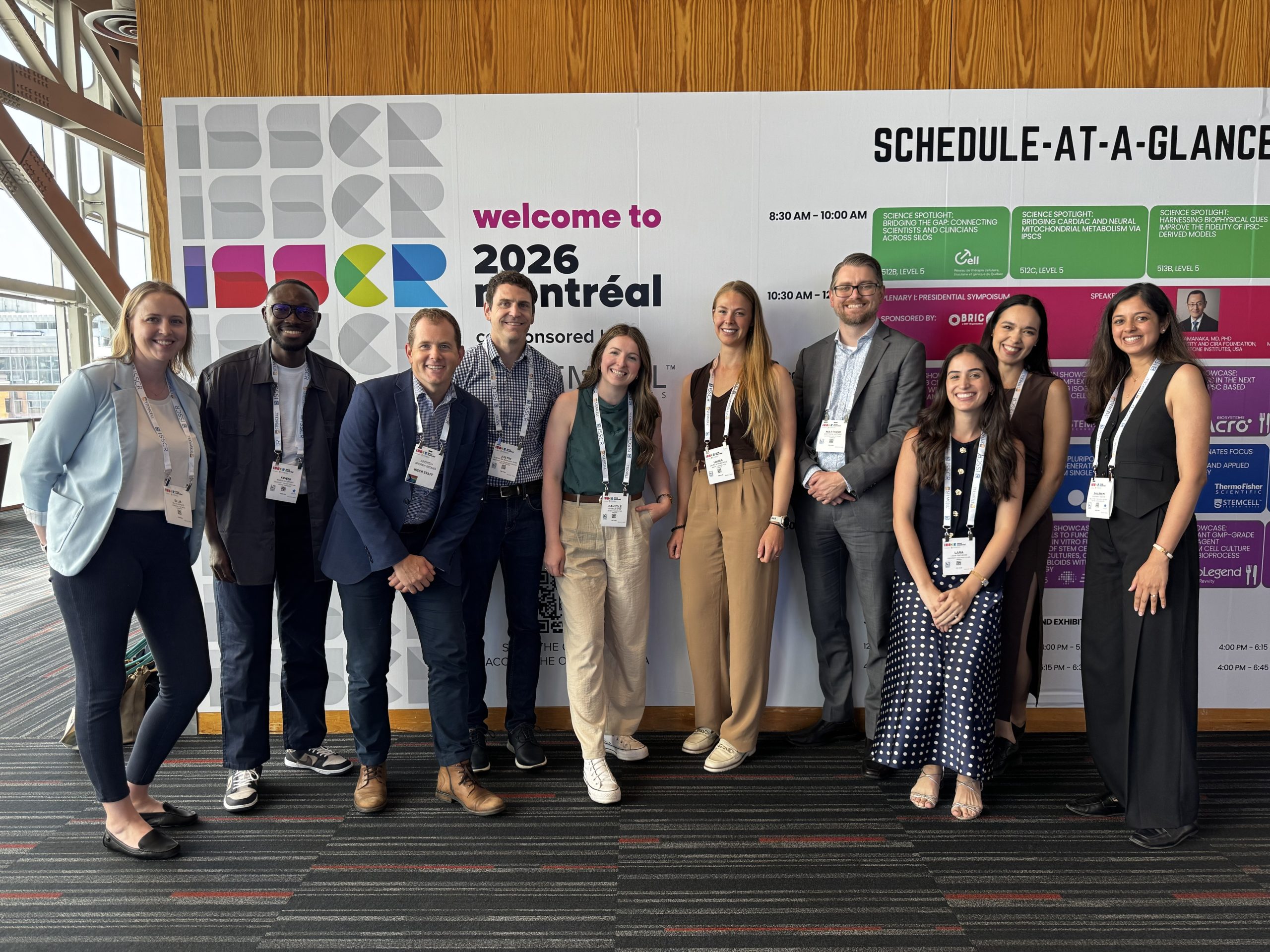
The ISSCR annual meeting brings together scientists, clinicians and industry professionals in stem cell and regenerative medicine to present cutting edge developments across the field. This year’s meeting included almost 200 talks and over 400 poster presentations across four days in sessions that looked very different than those in 2006.
The Evolution of Stem Cell Discoveries into Actual Therapies
Dr. Yamanaka’s description of stem cell research over the last 20 years to today made clear the evolution of the field from basic scientific discovery to translational and clinical applications. Scientists for years described the promise of stem cells, but it resulted in few clinical translations because of a fundamental knowledge gap between discovery science and clinical manufacturing. Today this knowledge gap is closing, and with conditional commercial approval of two iPSC-based therapies in Japan2,3, stem cell therapies are now closer than ever to being a clinical reality.
A key takeaway from ISSCR 2026 is the essential partnership between academia and industry to incorporate clinical manufacturing considerations at the earliest possible time in product development. With spotlight sessions and panels with speakers from international industry giants like Century Therapeutics and Novo Nordisk, and Canadian industry powerhouses like Morphocell and CCRM, discussions around scale up, off-the-shelf iPSCs and regulatory compliance were centre stage. Seeing updates from clinical trials using stem cells across Parkinson’s, stroke, epilepsy, Huntington’s, geographic retinal atrophy, retinitis pigmentosa and cancer was invigorating, knowing how close these and other therapies are to reaching patients in need.
The Next Generation of Stem Cell Science
Beyond technical jumps in manufacturing, ISSCR 2026 confirmed we are living in the next generation of stem cell science, with many talks about artificial intelligence, bioengineering and human cell derived non-animal models (NAMs).
“What if we could virtualize biology?” Aviv Regev, PhD, Genentech, asked the audience to imagine a world where we not only have virtual in vitro models or virtual organs, but complex models of virtual patients. The use of large datasets across transcriptomics, proteomics and imaging are drastically accelerating drug discovery and our understanding of human development, and ISSCR 2026 speakers demonstrated that this imagined future is likely around the corner.
Cell engineering is the powerhouse of this next generation of stem cell-derived therapies. Specific talks like those presented by Serena Francesa Generoso, PhD, NYU, showing kilobase-scale rewriting of the genome4, and by Kate Galloway, PhD, MIT, showing a non-genome integrative tool for engineered iPSC selection5, illustrated how far the field has come in developing these tools and their potential for clinical impact. Beyond genome engineering, work presented by Sara Szadocka, PhD, Hannover Medical School, showing a functional human-iPSC derived cardiomyocyte tube over 4 cm in length, means the possibility of tissue replacement has never been closer.
NAMs are key to understanding human biology and have huge potential in drug development. Brain organoids were one model spotlighted during ISSCR 2026, like work by Madeline Lancaster, PhD, MRC, comparing neural stem cells in human and non-human primate organoids and the connection to brain size differences. But discovery science wasn’t the only highlighted use of NAMs – work presented by Kim Homan, PhD, Genentech, explained the usefulness of a stem cell-derived neural spheroid model for toxicity testing of novel drugs.
Is the Workforce Ready?
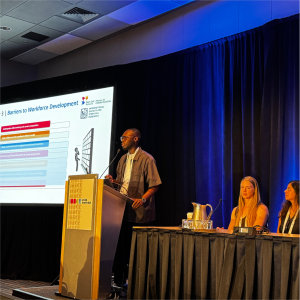
Is the stem cell and regenerative medicine workforce ready and trained for this new translational reality? ISSCR and the Stem Cell Network (SCN) have joined forces to evaluate training needs within the field and to make actionable recommendations across societies, institutions, governments and individuals to ensure that trainees and current workers are prepared for these new challenges. With a dedicated feedback session at the meeting and a comprehensive online survey (available until July 31, 2026), there was a demonstrated commitment of both organizations to understanding workforce needs. Working group members are excited to integrate this feedback into their data gathering for a proposed 2027 report and results sharing at SCN’s Till & McCulloch Meetings, November 9-11, 2026.
The landscape of stem cell science has shifted in the last twenty years, from a field of promising discoveries to clinical implementation. This fundamental shift is not only exciting for researchers and patients, but also poses a real challenge for the workforce of tomorrow to be ready to integrate many rapidly developing tools into their training and be knowledgeable in paths toward clinical translation.
References
- Takahashi, K., and S. Yamanaka. 2006. Cell. DOI: 10.1016/j.cell.2006.07.024
- Sawamoto et al., 2025. Nature. DOI: 10.1038/s41586-025-08700-0
- World’s first two iPSC therapies in Japan. 2026. Nat Biotechnol. DOI: 10.1038/s41587-026-03105-4
- Generoso et al., 2025. BioRxiv. DOI: 10.1101/2025.09.16.676382
- Wang et al., 2026. BioRxiv. DOI: 10.64898/2026.02.22.707289